
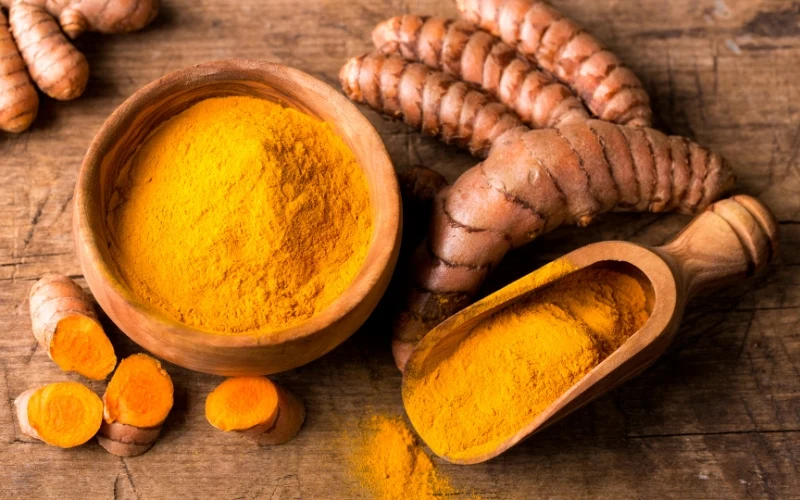
Curcumin. The yellow pigment and natural poylyphenol of the common spice turmeric. Its pronunciation has the accent on the first syllable; which is now not its only emphasis. Extensive research and clinical trials are currently pronouncing curcumin as a ‘new drug’. Interesting, since this active compound in the dried rhizome of Curcuma longa has been around longer than modern medicine.
It’s a fundamental component of traditional medicines that can be traced back thousands of years.
Used in Ayurveda for the treatment of a diversity of inflammatory conditions from respiratory diseases and skin conditions to gastrointestinal disorders, this healing discipline has been heavily practiced throughout India, Sri Lanka, Pakistan, Bangladesh and Nepal for more than 4,000 years. A topical paste of turmeric, mustard oil and salt is still used in the relief of gingivitis and periodontal disease. Traditional Chinese Medicine (TCM) and Traditional Arabic and Islamic Medicine (TAIM) are also millennia proponents of its wide-ranging health benefits.
Historically, it’s anti-inflammatory, analgesic and antimicrobial components have always been recognised. With two teaspoons of fresh turmeric containing about 400mg of curcumin, aside from its medicinal applications and familiar use in curries, in Japan, turmeric is popularly served in tea. In Thailand it’s used in cosmetics; in Korea, it’s served in drinks and Malaysians used it as an antiseptic. The US puts it in mustard, cheese, butter and chips as a preservative and colouring agent.
So why all the recent attention? Even Colgate Palmolive now has a turmeric toothpaste purported to improve gum health and whiten teeth. Curcumin has gained a roles as a dietary supplement that can be found not only in tablets and capsules but energy drinks, ointments and soaps. Both pharmaceutical and nutraceutical companies are focussing on its potential.
Even so, there are some people who should avoid consuming turmeric-containing medicines and preparations.
The Therapeutic Goods Administration (TGA) has revealed a rare, but potentially fatal link between the ingestion of turmeric supplements and liver damage. Although the risk of injury is low, 18 reports involving turmeric or curcumin products had one fatality and two rendered as ‘severe’. Predisposing factors appear to be the presence of autoimmune liver disease; a history of viral hepatitis; and the overuse of alcohol. In light of this, and with little understanding yet of how turmeric causes liver toxicity, in taking or suggesting the inclusion of these widely available medicines and herbal supplements, the TGA advises caution for both consumers and medical professionals.
In terms of dental health, oral microbial biofilms are largely composed of organisms with inflammatory potential. The mouth is an environment that changes; and poor oral hygiene is not the only culprit. Smoking, plaque accumulation, particular medications, certain metabolic diseases and even genetic susceptibility all affect the balance of this ecosystem. Variants in different bacteria populations affect the colonisation rate, composition and interactions that create gingivitis and periodontal disease.
Numerous studies in experimental periodontitis animal models conclude that curcumin effectively reduces inflammation and connective tissue breakdown. Treatment also resulted in a significant increase of collagen content and fibroblast cells – a very necessary connective fibrous material in adhering gums to teeth. Curcumin proved effective in suppressing inflammatory responses; although had no effect on bone loss caused by chronic periodontitis.
In the experimental group, when piperine (an alkaloid responsible for the pungency of black pepper; particularly long pepper) was added to curcumin, there were notable positive effects on tissue reconstruction, and enhanced early bone repair.
Other research has shown that curcumin improves the associated symptoms of diabetes – a recognised high risk factor of gum disease and subsequent dental issues.

Interestingly, when scientists moved from lab testing curcumin to live testing on patients in the 2010s, there was a catch: the compound’s very poor absorption rate. Therefore, getting sufficiently high concentrations of curcumin into the blood strictly through oral supplementation was almost impossible. This, along with the commercial difficulties of patenting a natural product gave reason for decreased scientific interest in curcumin until now.
Recent advances in drug delivery techniques have recovered this interest in curcumin, with nanoparticle systems paving the way for achieving high-dose absorption into the blood.
Statistically, more than 50% of adults worldwide suffer gum disease. In periodontal therapy, curcumin gel is a promising alternative to antibiotics. Local administration of curcumin-containing nanomaterials has also been found to prevent bone resorption.
Scaling, root planing and the invasive options of flap surgery, bone and tissue grafting and tissue regeneration have been gum disease basic treatments for the past 40 years. It’s the limitations of these advancements that prompted researchers from the NYU College of Dentistry to find yet another solution.
Associate research scientist in the Department of Molecular Pathobiology at NYU Dentistry, Dr Yugi Guo and her team have developed a topical gel and oral strips that can be used at home by those both at risk, and experiencing gum disease. A more intense, slow release formula for dentists to use on the pockets that form around the base of the teeth in affected areas forms part of this ingenious undertaking. Its perspective and results are so impressive it won the 2023 STAT Madness Award, an honour for innovative research in science and medicine.
There’s no turmeric or curcumin involved: instead, it targets and blocks the receptor for succinate – a naturally occurring molecule that becomes elevated in periodontal patients. Disabling this receptor counters inflammation and bone loss, and essentially shuts down the disease.
Tests proved that applying the gel every second day over four weeks to lab rats with gum disease not only significantly improved oral micobiome and inflammation, staggeringly there was 50% less bone loss.
With current approvals for further testing before moving onto human trials, it’s a phenomenal breakthrough that has incredible promise for sufferers of gum disease – including dogs and cats.
In the meantime, although curcumin certainly has its advantages, nothing outweighs it, or NYU’s future gel and oral strips like regular dental appointments and an unwavering focus on valuing and prioritising your own dental health.